Agricola, Alexander - Ave domina sancta Maria
 for 4vv.
year of composition / 1st publication: c1500
 |
Composer: Alexander Agricola (1445-1506) aliases, aka: born Alexander Ackerman Country of origin / activity: Flanders (Belgium) / Italy / France |
|
| Text author: traditional Last name, First name (s.a.), s.a. aliases, aka: Country of origin / activity: |
||
| Arranger / Editor: N/A Last name, First name (s.a.), s.a. aliases, aka: Country of origin / activity: |
Available documentation:
Score:| not available | |
| My thanks and appreciation to ... for sending me this score. |
|
Lyrics: (source)
| Ave domina sancta maria mater dei, regina celi, porta paradisi, domina mundi singularis pura tu es enim virgo. Tu concepisti Ihesum sine peccato, tu peperisti creatorem redemptorem atque salvatorem mundi, in quo non dubito, libera nos ab omnibus malis et ora pro peccatis nostris. Amen. |
Hail, Most Holy Mary, mother of God, Queen of Heaven, gate of paradise, Queen of the earth, uniquely pure: You are the Virgin; without sin you conceived Jesus; you carried the creator and Savior of the world; of this, there is no doubt. Free us from all evil, and pray for our sins. Amen. |
| MIDI: not available | MP3: not available |
Recording:
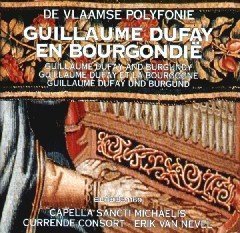 |
CD: Guillaume Dufay en Bourgondië Capella Sancti Michaelis / Currende Consort - Erik Van Nevel Eufoda 1169 tr13 Ave domina sancta Maria (Agricola) |
Video - posted on YouTube:
Internet references, biography information:
| http://en.wikipedia.org/wiki/Alexander_Agricola |
| From Wikipedia, the free encyclopedia Alexander Agricola (born Alexander Ackerman;[1] 1445 or 1446 – 15 August 1506) was a Franco-Flemish composer of the Renaissance. A prominent member of the Grande chapelle, the Habsburg musical establishment, he was a renowned composer in the years around 1500, and his music was widely distributed throughout Europe. He composed music in all of the important sacred and secular styles of the time.[2] Life Very little is known of Agricola's early life. He was born in Ghent, as suggested by a recently discovered epitaph, written in 1538.[3] Most of his life he spent in posts in Italy, France and the Low Countries, though there are gaps where his activities are not known, and he seems to have left many of his posts without permission. He was a singer for Duke Sforza of Milan from 1471 to 1474, during the period when the Milanese chapel choir grew into one of the largest and most famous ensembles in Europe; Loyset Compère, Johannes Martini, Gaspar van Weerbeke, and several other composer-singers were also in Milan during those years.[4] In 1474 Duke Sforza wrote a letter of recommendation for him to Lorenzo de' Medici, and Agricola accordingly went to Florence. In 1476 he is known to have been in Cambrai, in the Low Countries, where he probably was employed as a singer. For the long period from 1476 to 1491 nothing definite is known except that he spent part of the time in the French royal chapel, and he must have been building his reputation as a composer during this time, for he was much in demand in the 1490s, with France and Naples competing for his services. In 1500 he took a position with Philip the Handsome, who was Duke of Burgundy and King of Castile. He apparently accompanied the Duke on his travels through his empire; by this time he was one of the most esteemed composers in Europe. He was in Valladolid, Spain, in August 1506, where he died during an outbreak of the plague on 15 August of that year. Musical style Related schools and composers Agricola is one of the few transitional figures between the Burgundian School and the style of the Josquin generation of Netherlanders who actually wrote music in both styles. Agricola's style is related to that of Johannes Ockeghem, especially early in his career, and towards the end of his life he was writing using the pervasive imitation characteristic of Josquin des Prez. While few of his works can be dated precisely, he does use many of the non-imitative, complex, rhythmically diverse contrapuntal procedures more often associated with Ockeghem. Unlike Ockeghem, however, he was willing to employ repetition, sequence, and increasingly imitation in the manner of the other composers who were working around 1500 when the technique became widespread. Genres Agricola wrote masses, motets, motet-chansons, secular songs in the prevailing formes fixes such as (rondeaux and bergerettes, other chansons), and instrumental music. Much of his instrumental music was based on secular music by Gilles Binchois or Ockeghem. Many of these pieces had become quite popular in the late 15th century. Compositional hallmarks Above all the variants in his general musical style over his working life, Agricola himself wrote in a highly distinctive style, taking the mysteriously sinuous lines of Ockeghem as his point of departure. His music is often very busy and highly detailed, with repeated sequence, repetition of terse rhythmic and motivic units, and a desire to usurp the underlying pulse, sometimes seeming to border on the perverse, either by prolonging cadential figures to cadence on the "wrong" beat, or by shifting the metrical beat of some parts against others. As an example, the closing Agnus Dei of his unusually extended Missa 'In myne zin' features the cantus firmus stated in equal notes of eleven quavers' duration each in first statement, followed by a statement of five quavers' duration each, or in the second Salve Regina setting, offsetting part of the statement of the cantus firmus by a quaver for its entire duration, in both cases with the other voices proceeding in a more strict quadruple meter above. Other "games" played in the music include posing puzzles of mode and musica ficta for the performers (e.g. the Kyrie of the Missa Le serviteur plays with the expectations of the very well known plainchant cantus firmus by setting up some knotty issues of the implied possibility of modal inflection with consistent extra flats.) The music is characteristically athletic in all voice parts, with the lower parts in particular featuring much that requires very fine singers, and not representing the normal simply harmonic function of the tenor-bass combinations used by most of his contemporaries. Often a highly elaborate set of quick motifs will spring unexpected from a previous slow-moving texture (e.g. the eruption of detailed duos beginning at Glorificamus te and climaxing at Adoramus te in the Gloria of the Missa in myne zin). His music was very highly regarded in its day, the very distinctive style leading to one contemporary commentator referring to it as "crazy", and another as "sublime". There are other composers named Agricola who are sometimes confused with Alexander: Martin Agricola (1486–1556; famous mainly as a theorist and teacher) Johannes Agricola (1494–1566), German Protestant reformer and humanist Johann Agricola Eisleben junior (de) (before 1560-1594) Wolfgang Christoph Agricola (c. 1600 – c. 1659) Johann Paul Agricola (1638 or 1639–1697) Georg Ludwig Agricola (de) (1643–1676; also an important writer) Johann Friedrich Agricola (1720–1774; also a musicographer, organist and singing master) |
| comments below posted by: micrologus2 July 16, 2009 |
| Alexander Agricola (1446-1506) was one of the leading composers of the Josquin generation. The illegitimate son of a wealthy Ghent businesswoman, his career led him to most of the countries of Western Europe. Alexander's surname was apparently Ackerman, but he is called Agricola in most sources. Despite ample documentary evidence of his mother's activities, the first concrete reference to Alexander as a musician is from Cambrai in 1476. He must have found employment later at the French royal court, since the next concrete reference is to him leaving there without permission to go to Italy in 1491. He returned to France the next year, and was subsequently presented with an employment opportunity at Naples for half again as much salary as Josquin demanded of Ferrara. That appointment disappeared with the death of Ferrante I (1494), but Agricola went to Italy anyway. By 1500, he returned to his native Burgundy, and accepted a court appointment there. He traveled to Spain twice with Philip the Fair, and died in Valladolid of a fever in 1506. An epitaph states that he was 60 at the time, but there is reason to believe that he may have been as much as 10 years younger. Agricola's music was first transmitted in quantity in the 1490s. His most characteristic works are his songs and secular instrumental pieces, with over 80 surviving. They are overwhelmingly in three parts, and frequently quote songs by other composers, often in oblique fashion. Agricola's series of instrumental variations on De tous biens plaine is a particularly conspicuous example of his flair for variety and ornamental figuration. Most of Agricola's motets, of which he wrote over two dozen, are in a compact and straightforward style. The succinct three-voice Si dedero was the most-copied work of its generation, as well as a popular model for other settings. Agricola's stature was consummated with Petrucci's publication of a dedicated volume of his masses in 1504, and it is in his eight mass cycles that Agricola's unusual sense for counterpoint shows most clearly. His Missa In minen sin is one of the largest cycles of the era, a virtual encyclopedia of motivic variation. Agricola did not show the concern for text championed by Josquin, nor the feel for open textures pioneered by Obrecht. His counterpoint is extremely dense, with a fantastical feeling developing upon the "irrationality" of Ockeghem's designs. Agricola's larger settings are consequently some of the most intricate and inventive of the era, combining an abundance of contrapuntal ideas with a seemingly intentional arbitrariness into a web of shifting musical connections. |
probably of German nationality b abt 1470 d abt 1530 near Valladolid Spain He was one of Okeghem's many distinguished pupils served as a singer under Charles VIII of Krance Lorenzo de Medici at Milan and finally Philip I the Kair whom he followed from Brussels in 1505 to Spain 31 of his songs and motets were printed by Petrucci Venice 1502 3 who also published Venice 1503 a vol of 5 masses (Le Serviteur, Je ne demande, Malheur me bat, Primi toni, Secundi toni ) |
Page last modified: August 17, 2013
 avemariasongs
 org
org