Hulshagen Ludo (*1951)
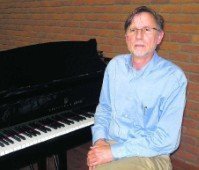
Ludo Hulshagen was born on 2 June 1951 in Hasselt. He studied Latin and
Greek at the Amandina College in Herk-de-Stad. In 1969 he began his
post-secondary music studies at the Royal Conservatory in Antwerp. There he
earned first prizes in solfège, written harmony, practical harmony,
counterpoint, fugue, music analysis and the study of form. He studied
composition with Willem Kersters, under whom he graduated in 1984.
From 1971, besides his studies, Hulshagen began to teach solfège at the
Tienen Music Academy. Some time later he became a teacher of harmony at the
Hasselt Conservatory for Music, Word and Dance. From 1976 to 1991, he worked
as a harmony teacher at the Royal Conservatory in Antwerp, and in 1983
became the director of the Tienen Music Academy. He held this post until
1987, when he became director of the music academy in Hasselt.
In 1987, he received the Cantabile Prize for his Invention for piano. Dexia
Bank awarded him 3 composition commissions for the renowned National
Competition for Music and Word, Axion Classics, and in 2002 he wrote A
Symphonic Exploration, a commission from the Flemish Radio Orchestra.
Work review
At the beginning of his career as a composer, Ludo Hulshagen was greatly
influenced by the work of his mentor, Willem Kersters. The music of Béla
Bartók and Paul Hindemith also left its mark on his compositions. He would
consequently make the choice to abandon tonality and begin to write in a
free-atonal idiom. Unlike his admired examples, he does not use a specific
system of tonal organisation. His aim is to create a particular mood through
carefully chosen harmonies, usually without involving an explicit programme.
He considers a strictly applied tonal system to be a limitation to this
approach. Despite avoiding tonal chords and progressions, Hulshagen’s music
has a relatively consonant character. He achieves this by distributing
dissonant harmonies, and even, not infrequently, clusters within a
contracted range, over one or more octaves. A good example of this procedure
is offered by his first large-scale chamber-music work, the String Quartet
in three movements (1976). Among the traces of Bartók’s influence here are
the regular use of ostinato and the harmonic language.
Hulshagen’s style may be termed expressionist in his early works, although
Romantic elements remain present. This is especially clear in works with
orchestral accompaniment, such as the Symphony no. 1 (1978) and Musica pro
iuventute ad iuventutem (1985), in both of which works he calls for various
kinds of Romantic tremolos in the strings.
One of the most important characteristics of Hulshagen’s music is the
abundant use of counterpoint, which is a result of his composition training
at the conservatory in Antwerp and his great admiration for the music of
Johann Sebastian Bach. The smaller scorings and piano works, which make up
the lion’s share of his oeuvre, are ideal vehicles for the contrapuntal
development of themes and motifs, leading to a great economy in the material
employed. He compares this manner of composing with classical Latin
literature, in which pithy formulations often have a subtle and rich
meaning. His Invention for piano is highly contrapuntal in conception, thus
recalling the Inventions by Bach.
Hulshagen’s love of literature and in particular poetry finds its expression
in a series of songs for choir, vocal ensemble or voice with piano
accompaniment. He usually chooses texts by Limburg poets such as Pieter
Geert Buckinx, Bertus Aafjes and Boudewijn Knevels. Particularly worthy of
mention is the song cycle Droomvuur (Dreamfire, 1997) for tenor and piano,
on texts by Buckinx.
Over the course of the 1990s, a stylistic evolution took place in the work
of Ludo Hulshagen, as his style became more transparent and his musical
material was worked out with ever greater economy. Hulshagen set out to
write more 'for the ears of the audience', leading to the use of more tonal
elements. These simplifications are clearly evident in the Piano Quartet
(1995), in which he employs a strongly homophonic style without complex
chords and rhythms, and in the instrumental ‘interludes’ for the Virga Jesse
liturgical drama held in Hasselt in 2003.
This ‘more tonal’ writing is no doubt related to his work as a teacher and
director at the music academies of Tienen and Hasselt. At both institutions
he has regularly provided didactic pieces and compulsory works for public
exams. His oeuvre includes several larger works intended for performance by
and for young people. Among these works is Musica pro iuventute ad
iuventutem, written in 1985 for the Limburg Youth Orchestra, and the
children’s cantata De Tijd (2000) for soprano, children’s choir and piano,
on a text by Boudewijn Knevels.
List of works
- Solo: Menuet for piano (1973); Preludium for piano (1974); Fantasia for
piano (1977); Luxus splendidus per campane for carillon (1986); Invention
for piano (1987); Dodecafonia for piano (1988); Dialogo for guitar (1989); A
prayer for piano (1995); Fantasia II for piano (1996); Sortie for organ
(2003)
- Chamber music: Sonatine voor Houtblazers for flute, hobo, clarinet and
bassoon (1974); String Quartet in 3 parts (1976); Recitatief for English
horn and piano (1978); De Poembak for mixed ensemble (1978); Koraal for 4
horns (1979); Larghetto for horn and piano (1979); Ballade for flute and
piano (1980); Sonata for violoncello and piano (1982); Retrospectie for
flute, clarinet and violin (1983); Bachs Metamorfose for large brass
ensemble (1988); Recitativo Accompagnato for flute clarinet and piano
(1990); Waltz for horn and piano (1992); Notturno for piano trio (1992);
Little Romance for violin and piano (1992); Little Ballad for flute and
piano (1993); Little Fantasy for clarinet and piano ((1993); Recitativo for
brass and piano (1993); A simple melody for flute and piano (1995); Piano
Quartet (1995); Herkenrode Hymne for horn, 2 marimba’s, string trio and
piano (2002); Melodie for solo instrument and piano (2002)
- Vocal: De kern van alle dingen for men's choir (1975); Drieluik for choir
(1981); De Blikken Fluit for orchestra and children's choir (1982); Zacht
ruisen doen de bomen for 3 equal voices (1983); Assepoester for orchestra
and choir (1984); Moederschap for alto and piano (1988); Een Zonnelied for 3
equal voices (1990); Jubileumlied for 3 equal voices (1996); Drie liederen
for tenor and piano (1996); Liedcyclus “Droomvuur” for tenor and piano
(1997); Reflectie for voice and piano (1998); De Tijd for soprano,
children's choir and piano (2000); Slotlied Virga Jessespel for alto, choir,
piano and orchestra (2003)
- Orchestra: Symphony no. 1 (1978); Musica pro iuventute ad iuventutem
(1985); Jong Bronsgroen (1986); The King’s Juell for string orchestra and
cornet (1989); Fantasia in D for string orchestra; Capriccio (1990);
Ouverture Festiva (2000); A Symphonic Exploration (2002); Tussenspelen Virga
Jessespel (2003)
Bibliography
Not available
Discography
Recordings are available at request. Please contact the composer.
Do you see a public domain score you
like, but you cannot download it?
Other questions or comments about this web site?
E-mail me:
infoavemariasongs.org
Thank you for visiting Geert's Ave Maria pages. My guestbook is always
only one page away.
Please do not use my guestbook for spamming, flaming or commercials for
other websites. Such entries will be deleted.




 avemariasongs.org